
Site: home > Project Example > Top 10 Common Faults of Cone Crusher: On-site Rapid Troubleshooting Guide for Mines
 Msn Online:yifancrusher@yahoo.cn
Tel:+86-371-64628852
News About Crusher
 2026-10-21
How to adjust the opening size of a cone crusher
View More...- 2026-10-16
Top 10 Common Faults of Cone Crusher: On-site Rapi
View More... - 2026-10-14
What Fields Are Cone Crushers Mainly Used In
View More... - 2026-10-10
Jaw Crusher: An All-rounder for Crushing across In
View More...


Top 10 Common Faults of Cone Crusher: On-site Rapid Troubleshooting Guide for Mines
Date: 10/16/2026 Print collection Cone crusher serves as the core secondary crushing equipment in sand aggregate and mine crushing production lines. Various faults tend to occur after long-time heavy-duty operation, which reduces the output of the whole production line. Below are 10 frequent on-site problems sorted out to help operation and maintenance personnel quickly identify and resolve them.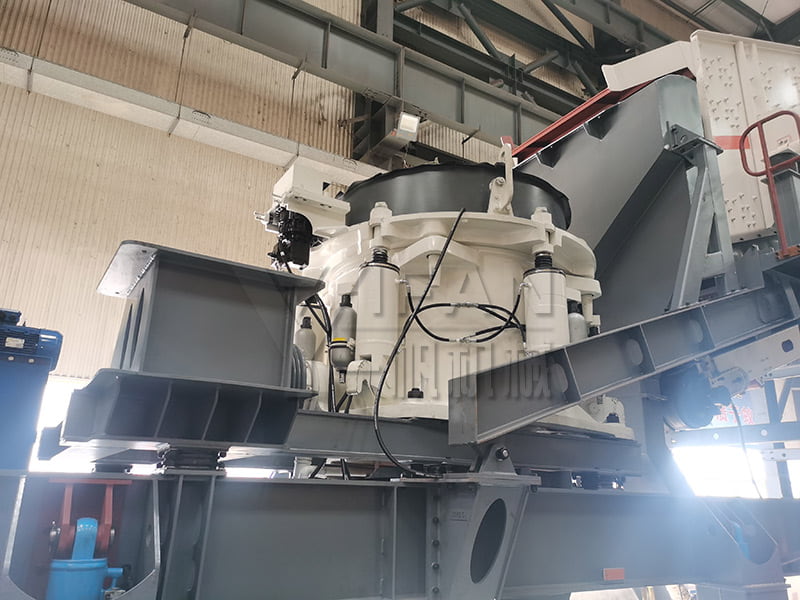
- Cavity choking and material blockage: Excessive feeding volume, wet and sticky materials or too small discharge opening cause materials to jam in the crushing cavity. The motor shuts down due to overload; in severe cases, the main shaft may seize up.
- Oversized finished particle size: Wear of mantle and bowl liner widens the discharge gap. Insufficient hydraulic pressure and excessive yielding under impact of hard materials lead to more large lumps in discharged products.
- Abnormal main machine vibration: Loose anchor bolts, poorly fixed liners, unilateral impact caused by biased feeding, or abnormal clearance from eccentric bushing wear will trigger violent vibration.
- Excessively high lube oil temperature: Insufficient oil volume, deteriorated oil, clogged cooler or too small bushing clearance lead to temperature rise from continuous high-load friction, activating high-temperature protection shutdown.
- Equipment oil leakage: Aging or damaged oil seals, loose pipeline connectors and worn sealing parts. Oil seepage often occurs at the eccentric bushing and hydraulic cylinder positions.
- Abnormal metallic noise inside cavity: Loose or fallen liners, iron blocks entering the crushing cavity, excessive wear clearance between main shaft and eccentric bushing, or direct collision between mantle and bowl liner create strange metallic sounds.
- Unstable hydraulic system pressure: Impure hydraulic oil, clogged filter element, insufficient nitrogen in accumulator and internal cylinder leakage make it impossible to keep stable discharge opening size.
- Failed tramp iron protection: Air leakage of accumulator or stuck hydraulic valve. When iron blocks enter the cavity, the equipment cannot yield rapidly, and the impact damages the main shaft and liners.
- Rapid liner wear: Highly abrasive materials, feed segregation, improper liner material selection and unreasonable material level inside crushing cavity accelerate liner consumption.
- Severe fluctuation of motor current: Unstable feed rate, uneven moisture of materials and accumulated materials in crushing cavity result in frequent overload tripping of the motor. Regular inspection and lubrication as well as standardized feeding operation in daily work can greatly reduce the failure rate of cone crushers and ensure stable and continuous production of sand aggregate lines.
Honours

Service
Service
Tel:
+86-371-64966831
Fax:
+86-371-64628872
E-mail:
yifanseo@yfmac.com
MSN On Line:
yifancrusher@yahoo.cn
Skype On Line:
yifancrusher